Mitzvah Tracker LIVE
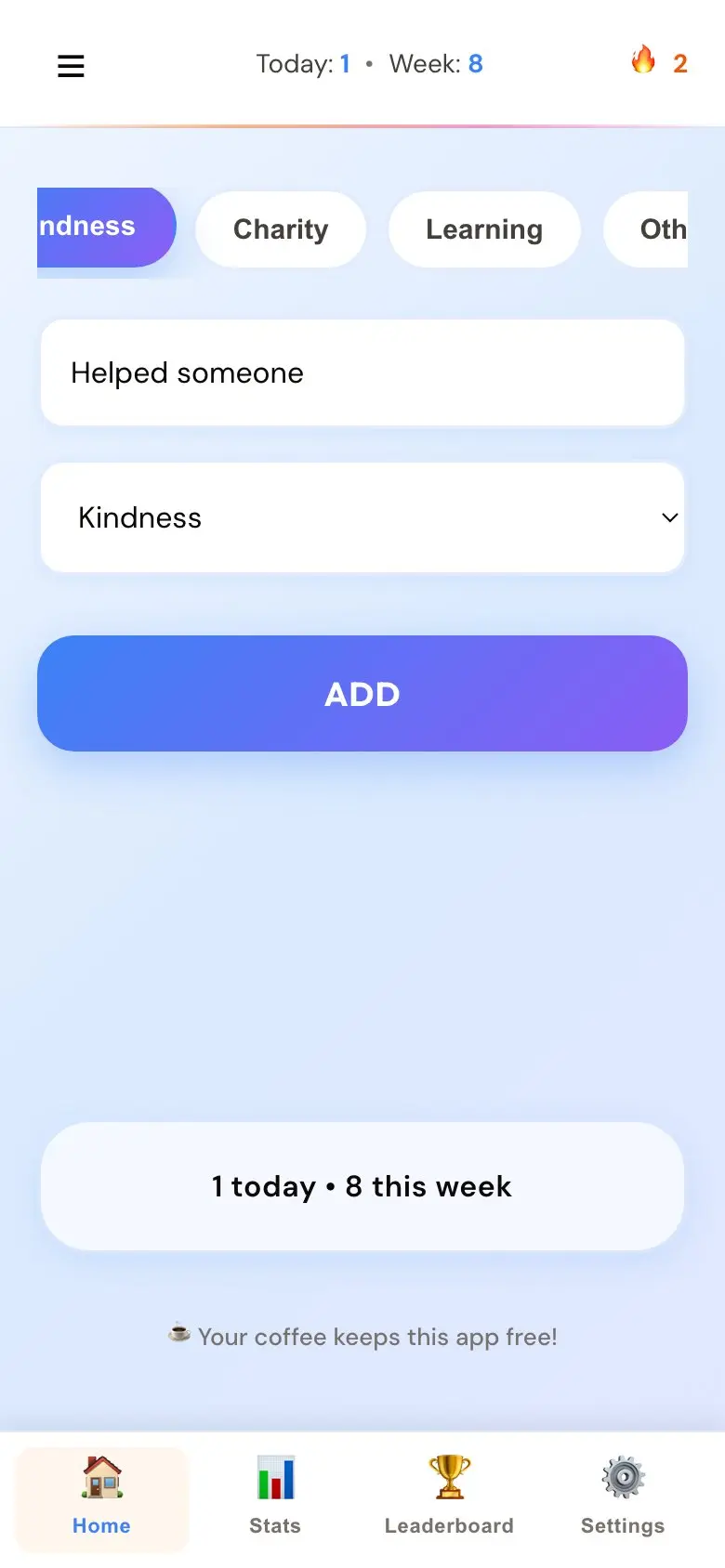
Track your mitzvahs with zero friction. Built on the science of consistency and the value of every single act of kindness.
Track your mitzvahs. Live your values.
Mitzvahs aren't about points. They're about meaning. But consistency is hard. Mitzvah Tracker uses behavioral science to help you turn good intentions into daily character.
The Science of Consistency
Our tradition values action. Science values repetition. We use both.
Tracking creates a feedback loop (Behavioral Reinforcement). You do good, record it, and feel good. It takes an average of 66 days to form a habit, so commit to the process, not just the result. Most importantly, your journey is personal—between you and your conscience, not an algorithm.
Features for the Thoughtful
Built for privacy. Designed for focus.
- Zero Friction: Open. Tap. Close. Done in 3 seconds.
- Visual History: See your consistency over weeks and months.
- Custom Mitzvahs: Track specific goals. Tzedakah? Visiting the sick? Learning?
- Total Ownership: Your data is yours. Export it as JSON anytime.
- Offline Access: Works anywhere. No signal required.
Privacy is Our Halacha
We respect your privacy as a religious principle.
- Local-First: Data stays on your phone.
- No Tracking: No analytics. No third-party observers.
- Total Control: Export, delete, or reset your data anytime.
- Strictly Optional Sync: Streak counts can be shared anonymously if you opt-in.
FAQ
Is it free? Yes. Always.
Can I export my data? Yes. You can download a full backup (JSON) anytime.
Who sees my mitzvahs? Only you.
Start Today
"The essential thing is the deed." Start yours now.
Sources
- Habit Formation: Lally, P., et al. (2010). European Journal of Social Psychology.
- Volunteering & Health: Okun, M. A., et al. (2013). Psychology and Aging.